For this reading we studied the latter half of the post modernist era of graphic design. What really spoke to me in these chapters was the explosion of poster design, from the highly political to the psychedelic mind warping of American poster mania. The creativity and the effect of past movements on the posters stood out to me. I was particularly drawn to the works of the artists Robert Wesley "Wes" Wilson. This poster for example.
The typography in the poster is so much more expressive and interesting than the clean, sterile look of the Swiss International style. This poster and the movement were about flowing line and playing with the shapes that one could make with typography.
There is a real influence from the art nouveau movement in his work. These two posters seem almost Mucha-like.
It's obvious to me that Alphonse Mucha's work had a rather large impact on Wes' style. The art nouveau line that takes place in much of the typography of the Psychadelic movement is taken a step further with the subject matter of the female form that appears in many of Wilson's posters.
It's also rather exciting to see poster art meant to encourage political activism. There is a quite inflammatory image that Wes produced in response to the Vietnam War.
The reminder to be AWARE I feel is an important one, for the times when we are not vigilant and allow ourselves to fall into complacency is when the meanest of us will take advantage.
What I found intriguing about this weeks reading was the evolution of a artistic movement based on a mainstreaming of Typography. Most of the movements we have learned about have referred to graphics or images and the styles and techniques that were grouped together. It's refreshing to have a movement based around communicating with words in a clear way.
Swiss Modernism was a movement that emphasized communication over the attention grabbing of advertisements. It is fitting then that as the world began to move closer to the modern era and the world began to grow smaller with the development of mass communications that the International Typographic Style would arise.
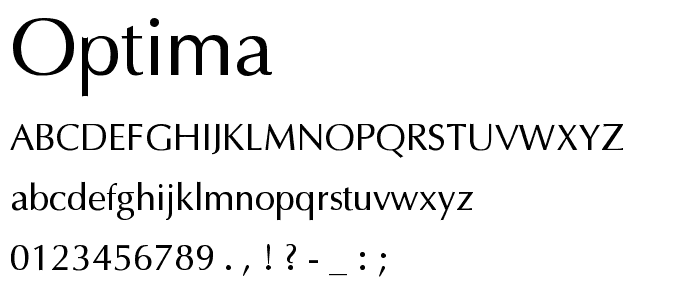
Note the lack of serifs and the boldness of the type, communication is the key function.
A forerunner of the movement, Amil Ruder a typography instructor of the Basel School of Design taught that legibility and readability are dominant concerns and that type loses its purpose if it loses its communicative meaning.
The fonts in this movement epitomized this ideal. In 1954 Adrian Frutiger completed Univers a font with 21 variations.
This era was also the orgin of the popular font Helvetica, which is a traditional Latin name for Switzerland.
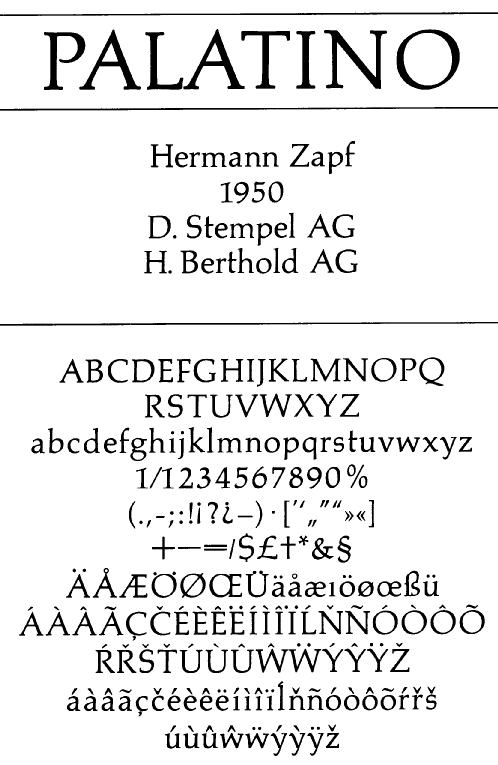
German designer Hermann Zapf would evolve traditions of calligraphy and Renaissance Typography into three typefaces that would also exemplify the movement
I found the immigration of many of the Bauhaus designers to be fascinating. I of course had heard of scientists and the like coming to America to escape from Nazi Germany, but had given little thought to the artists and designers of the country and the effect they had on American design. The fact that key figures in the movement such as Groipus and Marcel Breuer were teaching at Harvard and Moholy-Nagy created the Institute of Design in Chicago was mind opening for me. I have to say I like their tenet of form following function. The sleekness and simplicity of their designs is an interesting juxtaposition to the heavy ornamentation and decoration of the Art Nouveau movement, for instance.
And their application of design to architecture is also something that is inspiring. Below I have several images of the Dessau Bauhaus.
The building itself has a very fluid yet machine-like dynamic to it. The perfect center for a movement that was characterized by the unity of Art and Technology.
I also love the idea of such a place being a wellspring of ideas and innovation, a school based on innovation instead of stagnation and dogmatic thinking.
The turn of the century was a turbulent time for the human race. There was great upheaval in the societal, social, political, and economic aspects of human life. It was a time of artistic experimentation as people sought a new way to express the emotional uproar that the events that unfolded around them had driven them into. Several artistic movements influenced by the time such as Cubism, Futurism, Dadaism, Surrealism, and Expressionism.
Cubism was an intriguing movement that experimented with human perception of images and forms through the use of geometric planes, shapes, values, and colors.
Pablo Picaso was the originator of the movement and enthusiastically played with the classical norms for human figure, by rotating, abstracting, chopping up and redistributing viewpoints.
Futurism was a movement characterized by a violent love of war, the machine age, speed and modern life. To quote their manifesto, their intent was to "Destroy the cult of the past... Totally invalidate all kinds of imitation... Elevate all attempts at originality... Regarded art critics as useless and dangerous... Sweep the whole field of art clean of all themes and subjects that have been used in the past... Support and glory in our day-to-day world which is going to be continually and splendidly transformed by victorious Science."
What I found so interesting about this movement is the experimental use of type that was implemented by so many of the poet/painters that embodied the movement. Filippo Marinetti, founder of the Futurists used typography to express emotion and feeling that is typically lost when translated from spoken to written language as well as a particular iconography in how the capitals seem to create the landscape of mountains and valleys the poem describes.
Filippo Marinetti "Montagne+Vallate+Strade x Joffre" 1915
I find a similar aspect in the more modern art of kinetic typography of which I've provided a small example of in the video below. There is the same type of emotional expression in the presentation of the words but presented with speed and animation. I think the futurists at the beginning of the last century would have accepted this as a part of their own movement had it been possible at the time.
As an experiment, try watching video again, but without sound and see if it still evokes the same feeling.
Dadaism as a movement embodied much of the violence and drive of the Futurist movement and took it to more of an extreme. The Dadaist claimed to be anti-art and had a strong negative and destructive element. The rebelled against the horrors of war, the decadence of European society, the shallowness of blind faith in technological progress, and the inadequacy of religion and conventional moral codes. They took the Futurist rejection of tradition, but instead of an embracing an idealized version of the future, there was only the present and the need to change it.
"Whoever reads the bourgeois press turns deaf and blind. Away with these stupidity causing bandages!"-John Heartfield
Surrealism was the searching for the "more real than real world behind the real". As convoluted as that sounds, that quote sums up the movement quite succinctly. Art from this movement embodied the inner thoughts, intuition and feeling of the artists. It was at the same time deeply personal and yet could evoke a universal response from large numbers of people.
"Geopoliticus Child Watching the Birth of the New Man" by Salvador Dali
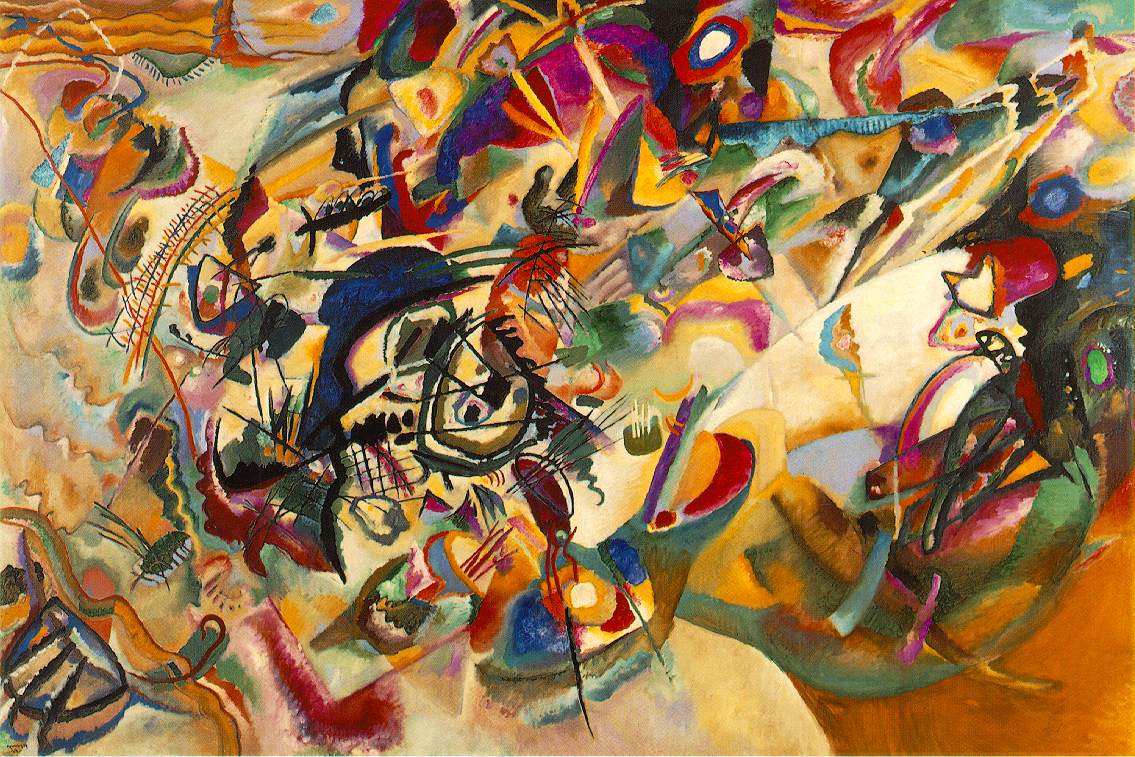
Expressionism was the tendency to not depict objective reality but rather subjective emotions and personal responses to subjects and events. Visually there was a heavy use of symbols, with pronounced lines and color and value contrasts were intensified. The controlled geometric patterning and constrictive rules of realism were abandoned for thick paint, loose brushwork, and bold contour drawing. Expressionist fostered a deep and intense idealism that bucked the authority of the military, education, and governmental rule. There was a deep empathy of the poor and social outcasts, these were often the subjects of expressionists.
Wassily Kandinsky, Composition VII, 1913
There was also a deep focus on pictorial art during this time period, as radio and other means of electronic communication were far from being widespread, the art of poster-making was being refined and used to advertise and support propaganda and war efforts.
This art movement shares a grapic style with graphic artist Sheperd Fairey, who I was recently made aware of by a colleague of mine
Art Nouvea was an international decorative style that thrived for two decades at the turn of the 19th and 20th century. It encompassed a large variety of the design arts from architecture, furniture and product design, to fashion and graphics, influencing the posters, packages and advertising as a whole. The key visual quality of Art Nouveau is an organic plantlike line. There is a sense of a flowing energy or line throughout it as it forms, decorates, and modifies a given space. Vine tendrils, birds, and the human female were frequent motifs from which this fluidity was developed.
Ukiyo-e was a Japanese art movement that took place around the time that Japan was first joining the world stage. It was an artistic style that was noted for it's prolific printing from woodblocks and screens. The flow and line of this style had a major impact on many European artists who would develop Art Nouveau.
Kitagawa Utamaro was a great example of a Japanese artist who embodied many of the traits and subject fixations that characterized the Art Nouvea movement. He had a great observation of nature and the female form. His work often included birds and plants, as well as many depictions of the female form.